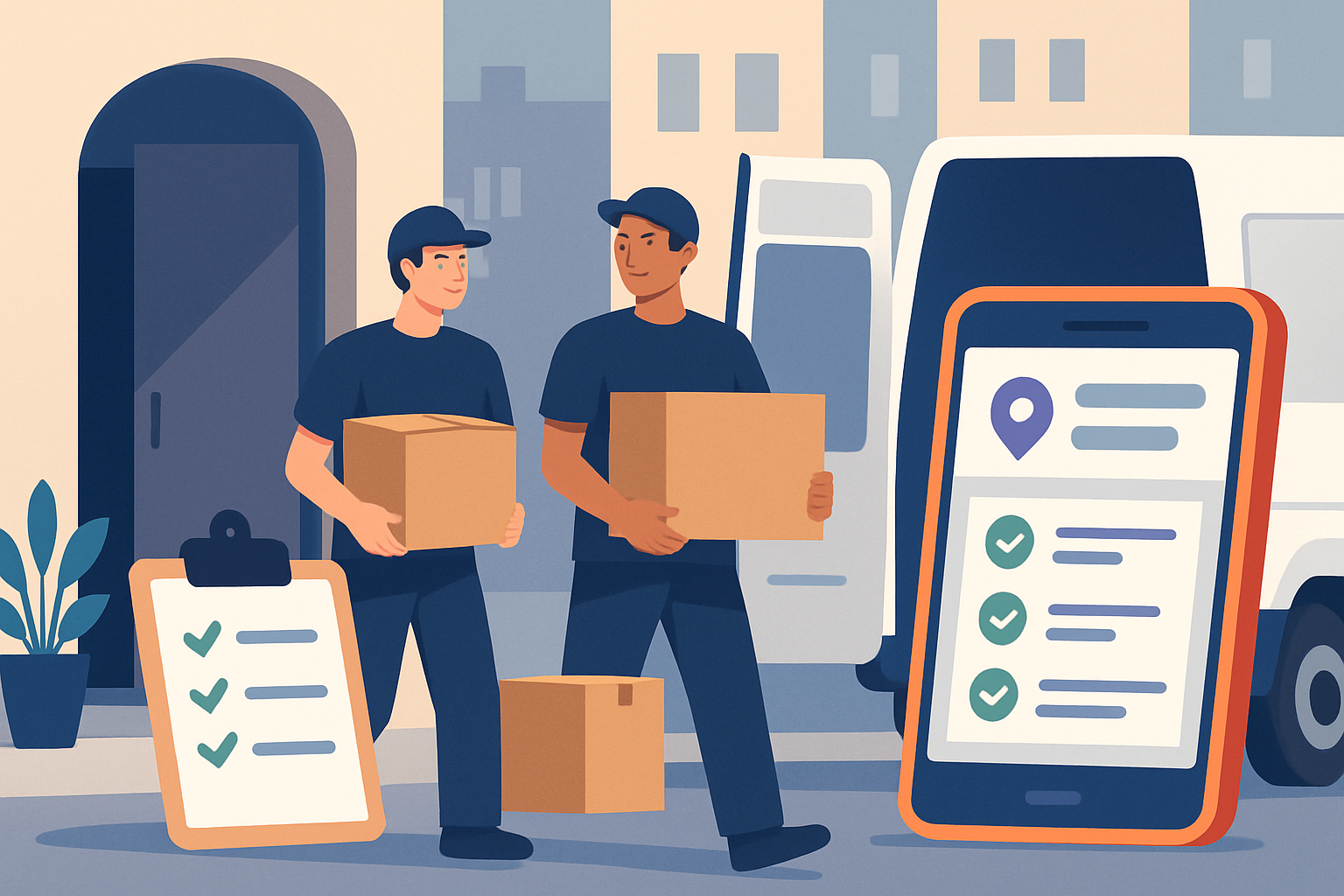
Moving help cost is confusing when you do not need a full moving company, only two people for a sofa, a van to unload, or a few hours of carrying boxes. Clients want to pay fairly without overbuying a service they do not need. Helpers, meanwhile, need enough detail to quote a price that covers time, travel, effort and risk.
Moving help cost: what changes the price?
Small moving tasks look simple from the outside, but the workload can vary hugely. Carrying 15 light boxes from a ground-floor flat is not the same as moving a washing machine down narrow stairs. The best price is usually based on effort, not only on the number of items.
The main factors are:
- Time on site: Many small jobs take 2 to 4 hours, but even a one-hour task still includes travel and planning.
- Number of helpers: Heavy or awkward furniture is often safer with two people.
- Stairs and lifts: No lift, tight landings and long walks to the vehicle all increase the workload.
- Weight and shape: A mattress, a flat-pack wardrobe and a washing machine require very different handling.
- Tools and equipment: A trolley, straps, gloves, blankets or a screwdriver can save time and prevent damage.
- Urgency: Same-day help, evening slots or weekend work may cost more.
- Transport: Carrying only is one service; coming with a car, trailer or van is another.
On a task marketplace such as MiniJob, clients can post a small local job and compare nearby applicants. The clearer the post, the easier it is for helpers to offer a realistic price instead of guessing.
Realistic price ranges for small moving tasks
The ranges below are practical guide prices, not fixed rates. Local demand, country, city size, experience, travel distance and urgency can move prices up or down. For international readers, the amounts are shown in EUR as a neutral reference; in Poland, similar small jobs may be agreed in PLN after converting to local expectations.
| Task | Typical time | Common price range |
|---|---|---|
| Carrying 10–20 boxes, short distance | 1–2 hours | about 30–70 EUR per helper |
| Disassembling and carrying bedroom furniture | 2–3 hours | about 60–120 EUR per helper |
| Moving a heavy sofa or washing machine | 1–2 hours | about 50–100 EUR, often with 2 helpers |
| Loading or unloading a van | 2–4 hours | about 70–160 EUR per helper |
| Small student room move, no vehicle included | 3–5 hours | about 100–220 EUR for a helper team |
| Helper with own car or van | depends on route | usually higher, agreed case by case |
A fixed price works well when the task is tightly defined: for example, “80 EUR for two hours unloading a van, second floor, lift available.” An hourly rate is safer when the job is uncertain: unknown number of boxes, furniture not yet dismantled, no photos, or unclear parking.
A useful rule is simple: the more exact the item list, the easier it is to set a fixed price. The more unknowns, the better an hourly rate with a minimum payment.
How clients can set a fair budget
A fair budget helps you get better applicants and reduces negotiation on moving day. If the offer is too low, good helpers may ignore it or ask many questions before applying. If the description is too broad, you may receive very different quotes that are hard to compare.
Use this process before posting:
- Count the items: Boxes, bags, large furniture, appliances and fragile pieces should be listed separately.
- Describe the building: Floor number, lift, stairs, hallway width and distance to parking all matter.
- Estimate the time: A studio or single room may take 2 to 3 hours; storage rooms, cellars and furniture assembly add time.
- Decide how many helpers you need: For heavy items, two helpers are often more efficient and safer than one.
- Choose the price model: Fixed price for clear tasks, hourly rate for uncertain tasks, or a fixed first block plus hourly extra time.
- Use photos: A photo of the sofa, stairs or parking area can prevent misunderstandings.
Example: You are moving out of a shared flat. You have 12 boxes, one desk, one chair, one small shelf and two suitcases. The room is on the third floor without a lift, and the van can park close to the entrance. A strong post might say: “Need help carrying and loading, about 2 hours, third floor no lift, 60–90 EUR depending on experience. Gloves useful.”
For a full household move, a local helper may not replace a professional moving company. Small task help is best for specific parts of the move: unloading a van, moving furniture between rooms, assembling flat-pack furniture, clearing a cellar, carrying boxes upstairs or preparing bulky items for disposal.
Pricing tips for helpers taking moving side jobs
If you want to earn extra money through odd jobs, moving help can be attractive because demand is regular and tasks are easy to understand. But beginners often underprice the work because they forget travel time, waiting time, stairs and heavy items.
Before applying, check:
- How far is the job and how long is the journey both ways?
- Are the floor, lift and parking situation clearly described?
- Are there heavy items that should not be carried alone?
- Is the client expecting tools, a trolley, a vehicle or only labour?
- Is the time window fixed, or could you be waiting for keys or a van?
- Does the client have a clear profile and past reviews?
A good application is short and specific. Instead of writing “I can help,” try: “I’m available Saturday 10:00–13:00. I can help carry boxes and dismantle light furniture, and I can bring gloves and a screwdriver. For the described job, I would quote 90 EUR.”
On MiniJob, contractors can build a profile with reviews and a portfolio. For physical local work, reliability, clear communication and realistic pricing usually win more repeat opportunities than simply being the cheapest applicant.
Checklist before the moving day
Small moving jobs run smoothly when both sides agree on the details before anyone arrives. Use this checklist whether you are hiring or applying:
- Address, meeting point and start time are confirmed.
- Floor number, lift access and parking are known.
- Heavy items are listed honestly.
- The number of helpers matches the workload.
- Price, payment method and estimated duration are agreed.
- Tools, trolley, straps, blankets and gloves are discussed.
- Fragile items are packed and labelled.
- Boxes are closed and not overloaded.
- Hallways and stairs are clear.
- The app chat or phone contact is available for last-minute updates.
Clients should prepare anything that does not require paid help: close boxes, empty drawers, remove loose shelves, tape cables and clear paths. Helpers should arrive on time, wear appropriate shoes and speak up if a task looks unsafe. A polite “this needs a second person” is better than damaged furniture or an injury.
Mistakes that make moving help more expensive
Most cost problems come from poor preparation, not from high rates. Avoid these common mistakes:
- Vague posts: “Small move” can mean five boxes or half a flat.
- Wrong item count: If the post says 15 boxes but there are 40, the price should be discussed again.
- No parking plan: A long walk between the van and the entrance can double the carrying time.
- Hidden heavy items: Washing machines, dryers and solid wood furniture must be mentioned early.
- Too few helpers: One person may look cheaper but can make the work slower and less safe.
- No time buffer: Delayed keys, traffic or a blocked lift can change the plan quickly.
A fair rule for both sides: when the job changes, the price conversation should reopen. That protects clients from surprise charges and protects helpers from unpaid extra work.
FAQ
Is one helper enough for a small move?
One helper may be enough for boxes, light furniture and short distances. For washing machines, large sofas, wardrobes or stairs without a lift, two helpers are usually safer. If you are unsure, describe the items and ask applicants to recommend the right team size.
Should I pay a fixed price or an hourly rate?
Use a fixed price when the task is very clear and the item list is complete. Use an hourly rate when the scope is uncertain, for example when furniture may need dismantling or the number of boxes is not final. A minimum payment for short jobs can be fair for helpers.
What should a moving helper bring?
At minimum: comfortable work clothes, strong shoes and gloves. Depending on the task, a screwdriver, trolley, straps or moving blankets may be useful. The post should say whether the client provides equipment or expects the helper to bring it.
Is local moving help cheaper than a moving company?
For small, specific tasks, it often is. A local helper can be a good choice for carrying, loading, unloading or assembling furniture. For full household moves, long-distance transport, valuable items or complex logistics, a professional moving company may be more suitable.
Final thoughts: clear details make prices fair
Moving help cost becomes much easier to manage when the task is described precisely: what has to be moved, how far, how heavy and when. Clients get better applications when they set realistic budgets. Helpers get better side jobs when they quote transparently and communicate before the work starts.
If you need local moving help or want to apply for small paid tasks near you, you can start for free on MiniJob. The Android app is available on Google Play.