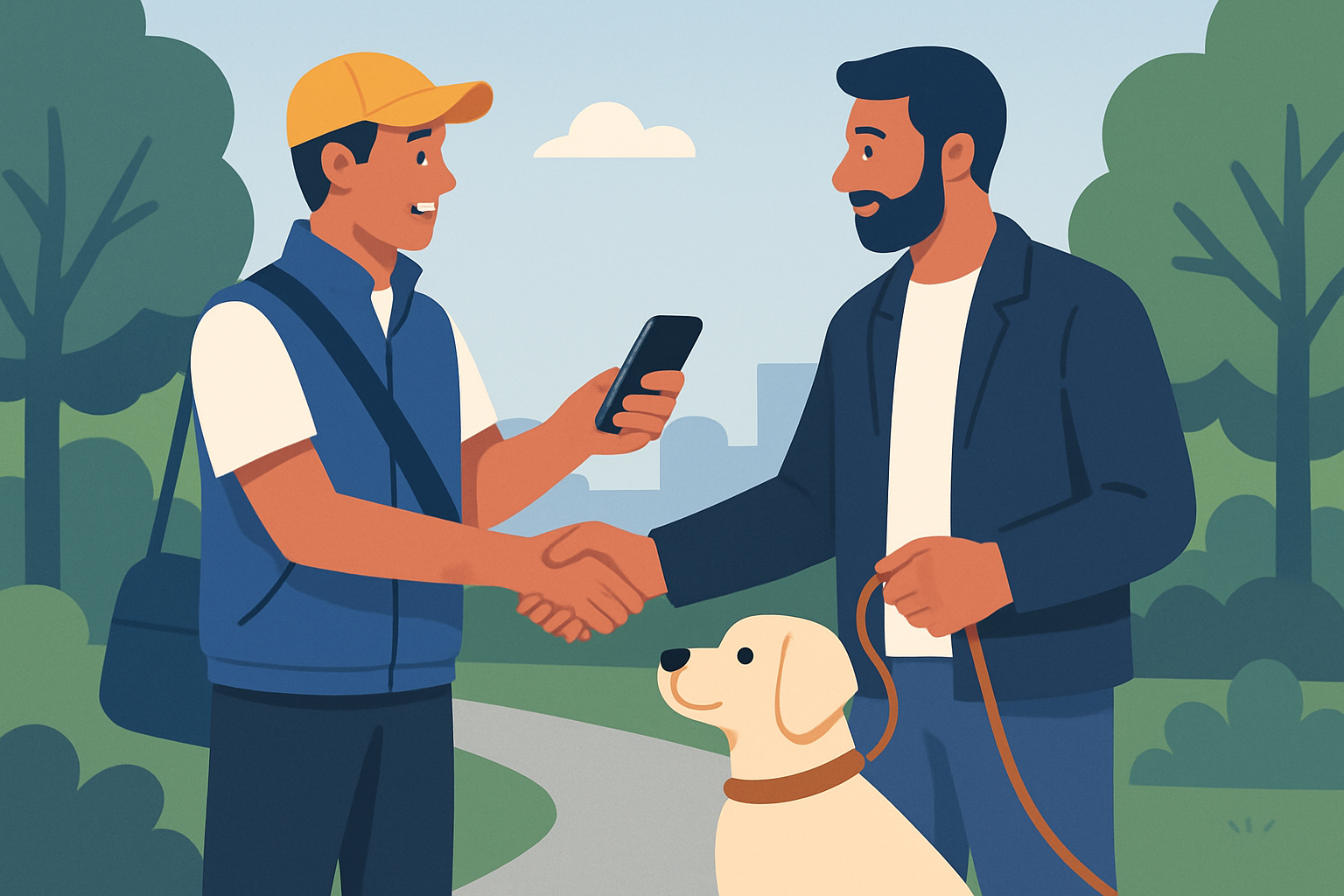
Dog walking gig work can look like the easiest side job in the neighbourhood: take a lead, walk around the block, get paid. The reality is a little more serious, because a client is trusting you with a living animal, and a helper needs to know exactly what is expected before accepting the task.
This guide is for both sides of the local pet-care exchange. If you need a reliable dog walker, it shows what to include in your post; if you want to earn extra money with small local jobs, it explains how to price, communicate and build trust without overpromising.
Dog walking gig work: what the task really includes
Dog walking and pet sitting are often used as if they mean the same thing, but the workload can be very different. A clear task description avoids the awkward moment when a 30-minute walk turns into feeding, cleaning muddy paws, waiting for a delivery and staying an extra hour.
Common local tasks include:
- Short dog walk: 20 to 30 minutes outside, usually near the owner’s home.
- Long dog walk: 45 to 60 minutes, sometimes with a specific route or park.
- Drop-in visit: feeding, fresh water, a toilet break and a quick check that everything is fine.
- Half-day pet sitting: several hours of company, play, rest and feeding.
- Full-day care: a longer commitment that may require updates, routines and clear handover.
- Holiday support: repeated visits over several days, sometimes combined with small home tasks agreed in advance.
For clients, the key question is: do you need a one-off rescue for a busy day, or a regular person your dog will get to know? For contractors, the key question is: can you safely handle this dog, location and time slot without rushing or improvising?
A task marketplace such as MiniJob works well when the job is specific. Clients post the local task, nearby helpers apply, both sides chat, agree the scope and price, then leave a rating after the job. That record of communication is useful because pet care depends on trust and details.
Typical rates for dog walking and pet sitting
There is no single global price for dog walking gig work. Rates change by city, travel time, number of dogs, experience, time of day and how much responsibility is involved. A quick walk in the same building is not the same as crossing town for a nervous young dog during evening traffic.
Use the table as a practical starting point, then adjust for your market. The ranges are intentionally broad because local prices can differ a lot.
| Task | Typical duration | Practical price range |
|---|---|---|
| Short dog walk | 20–30 minutes | EUR 8–15 or PLN 35–70 |
| Standard walk | 45–60 minutes | EUR 15–25 or PLN 70–120 |
| Drop-in visit | feeding, water, short break | EUR 12–25 or PLN 55–120 |
| Half-day sitting | 3–5 hours | EUR 30–60 or PLN 140–280 |
| Full-day care | 6–9 hours | EUR 50–100 or PLN 230–460 |
| Extra dog from same home | added handling | plus EUR 5–15 or PLN 20–70 |
Clients should be cautious with prices that are unrealistically low. A helper who spends 40 minutes travelling, 45 minutes walking and 10 minutes sending updates cannot do quality work for a token amount. Contractors should also be realistic: charging top rates before you have reviews, references or relevant experience may make clients choose someone else.
A fair price reflects:
- Total time: travel, handover, the walk, cleaning paws if needed and a short update.
- Difficulty: puppies, large breeds, anxious dogs, medication or city traffic require more attention.
- Reliability: early mornings, late evenings and last-minute requests can justify a higher fee.
- Frequency: a recurring weekly walk may be priced differently from a one-off urgent task.
- Extras: keys, feeding, litter trays, plant watering or home checks should be named separately.
The best price conversation is not a battle. It is a practical question: what exactly is included, how long will it take, and what level of responsibility is being accepted?
Checklist for clients: write a post that attracts good helpers
A vague post attracts vague replies. If you write Need dog walker tomorrow, good applicants still have to ask where, when, how long, what kind of dog and what behaviour to expect. Add the details up front and you will receive fewer but better applications.
Include these points in your task post:
- Location and timing: neighbourhood, date, start window and whether the time is flexible.
- Dog profile: name, age, approximate size, breed or mix, energy level.
- Outdoor behaviour: pulling on the lead, reactions to dogs, bikes, children or cats.
- Health and food: medication, allergies, feeding rules, treats allowed or not.
- Exact task: walk only, feeding, water, paw cleaning, photo or message after the visit.
- Access: key handover, building entry, lift, stairs, areas of the home that are off limits.
- Budget: fixed amount or hourly range, plus any condition for longer time.
A strong post might look like this:
Need help on Wednesday between 12:00 and 14:00 near the central station area. Five-year-old medium-sized mixed breed, friendly with people, pulls when he sees cats. Looking for a 45-minute walk, fresh water afterwards and a short message when back. Budget EUR 18–22 depending on experience.
For regular care, consider a short meet-and-greet before the first paid booking. Ten minutes together on the dog’s usual route can reveal more than a long message thread. The owner sees how the helper holds the lead and speaks to the dog; the helper can decide whether the dog is within their comfort zone.
Checklist for contractors: start professionally from the first reply
Dog walking can be a flexible way to earn extra money, especially if you like being outdoors and want side jobs close to home. Still, liking dogs is not enough. Clients are paying for reliability, judgement and calm handling when something unexpected happens.
Before applying, ask yourself:
- Can I arrive on time even in rain, heat or public-transport delays?
- Have I handled dogs of this size or temperament before?
- Do I understand basic lead safety in traffic and crowded areas?
- Can I say no if the dog or situation is beyond my experience?
- Do I have enough time for handover and an update, not only the walk itself?
Your first message should make the client’s decision easier. Avoid generic lines such as I love animals. Be specific: I live 10 minutes away, I am available Wednesday at 12:30, and I have walked two medium-sized dogs regularly for a neighbour. I would keep him on the lead for the first walk and send a message when we return.
On MiniJob, contractors can build a profile with reviews and a portfolio. For pet-care tasks, a portfolio does not need to be fancy. It can mention the types of dogs you are comfortable with, your availability, whether you accept early mornings, and the services you do not offer. Keep privacy in mind: do not publish clients’ addresses, keys, private rooms or identifiable information without permission.
Safety rules before the first walk
Pet-care trust is built through practical safeguards, not just friendly messages. Both sides should feel comfortable asking direct questions. A responsible owner explains the dog honestly; a responsible helper does not pretend to be experienced with situations they have never handled.
Agree on the following before the first job:
- Emergency contact: the owner’s phone number and, ideally, a backup person.
- Vet plan: what to do if the dog is injured or suddenly unwell.
- Equipment: lead, harness, collar, muzzle if used, waste bags, towel and food.
- Rules outside: whether the dog may ever be off lead, and how to handle other dogs.
- Home access: how keys are exchanged and which areas the helper may enter.
- Payment and overtime: the agreed amount and how extra time is handled.
One simple rule protects everyone: do not let a dog off lead on the first walk unless there is a clear, safe, agreed reason and the helper is fully comfortable. Even a well-trained dog may behave differently with a new person. It is reasonable for a helper to say, I keep all new dogs on lead until we know each other better.
Communication after the task also matters. A short update can say: Back home, 45 minutes walked, water topped up, no issues with other dogs. For nervous owners, that message is not a luxury; it is part of the service.
Common mistakes to avoid
The most common mistake is treating dog walking as too casual. A small job can still go wrong if the brief is unclear or the helper accepts something outside their skill level. Another mistake is hiding important behaviour because it might scare applicants away. If a dog lunges at scooters or panics in lifts, the helper needs to know.
Watch out for these avoidable problems:
- Unclear scope: walk becomes feeding, cleaning, waiting and home care.
- No time buffer: the helper books another appointment immediately after the walk.
- Wrong equipment: a weak lead, poorly fitted harness or no waste bags.
- Unconfirmed access: keys are not ready, door codes fail, nobody answers.
- Overconfident helper: someone accepts a strong or reactive dog without experience.
- No written recap: price, duration and extras are discussed verbally and then forgotten.
A good rule is to confirm the essentials in chat: time, address area, dog, task, price and emergency contact. That small habit saves stress and creates a clear reference if either side needs to check what was agreed.
FAQ: dog walking and pet sitting as side jobs
Do I need professional qualifications to walk dogs?
For simple one-to-one walking, many people start with practical experience rather than formal qualifications. However, you should check local rules if you offer regular care, transport, group walks, training or care for dogs with medical needs. Never present yourself as a trainer or medical specialist if you are not one.
How much should I charge for my first dog walking task?
Start with the local range, then adjust for travel time and difficulty. If you are new but reliable, choose a fair middle ground rather than the lowest possible amount. A short walk near your home may be priced modestly; a last-minute evening task for an anxious dog should cost more.
Should the owner and helper meet before the job?
For regular care, puppies, strong dogs or nervous dogs, a short meet-and-greet is highly recommended. For a one-off simple walk, a detailed handover may be enough, but neither side should ignore doubts. If something feels unclear, ask before accepting.
Where can I find local dog walking tasks or helpers?
A local task marketplace helps because it brings nearby clients and contractors into one place. On MiniJob, clients can post small assignments and contractors can apply, chat, agree a price and build reviews after completed jobs.
Final thoughts: small pet-care jobs need clear boundaries
Dog walking gig work can be rewarding for contractors and genuinely helpful for busy owners. The difference between a smooth job and a stressful one is usually not luck; it is a clear brief, a fair price and honest communication about the dog.
If you are ready to post a pet-care task or look for side jobs nearby, start with MiniJob on the web and get the Android app on Google Play.