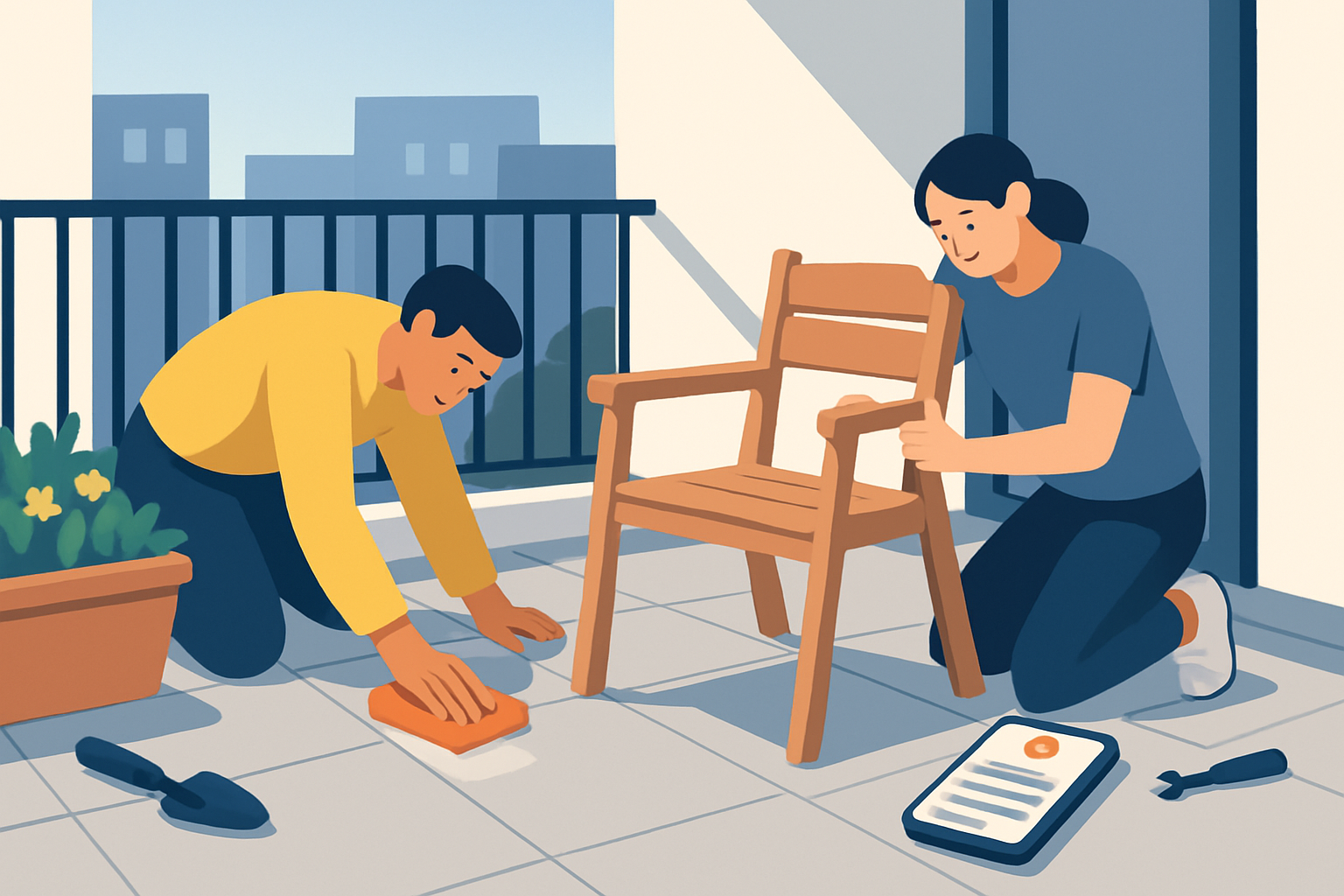
Gig work for balcony and patio refresh jobs is a practical answer when the outdoor space is too small for a contractor but too annoying to handle alone. A few hours of cleaning, furniture assembly and planting can turn a dusty corner into usable space, while giving local workers a simple side job with visible results.
These tasks are best when they are specific: wash the tiles, assemble two chairs, remove old pots, plant herbs, wipe the railing, set up lights. This guide explains what can be handled as a local odd job, how to price it fairly, what to include in a task post and where the common misunderstandings happen.
Gig work for balcony and patio refresh jobs: what fits the task
A balcony or patio refresh is usually not a renovation project. It is a short, practical job that needs care, basic tools and a clear scope. Good examples include:
- sweeping and washing balcony tiles, railings and window ledges,
- removing leaves, old soil, empty pots and packaging,
- carrying light unwanted items to the building’s disposal area,
- assembling flat-pack outdoor chairs, a small table or storage box,
- planting herbs, flowers or simple container arrangements,
- cleaning outdoor furniture before the season,
- hanging battery lights or light decorative items,
- preparing a small terrace for guests or for the end of the season.
Some jobs should not be treated as casual gig work. Installing a heavy awning, drilling into a building façade, electrical work, exterior railing work, drainage repairs or any task that requires leaning outside the balcony should be handled by someone with proper experience, equipment and, where relevant, permissions. A small job is still a real job; safety matters more than saving a little money.
On MiniJob, clients can post a short local task and nearby contractors can apply. The client compares applicants, agrees on the price in chat and leaves a rating after the job, which is useful for small jobs that need trust but not a full service company.
Price ranges: what clients pay and workers charge
Prices vary by city, travel time, access to water, whether there is a lift, the level of dirt and who provides tools or supplies. The ranges below are not official rates; they are realistic starting points for a conversation. Use your local currency where you live. For international readers, the examples below are shown in EUR and PLN to give a practical scale.
| Task | Typical time | Example price range |
|---|---|---|
| Basic balcony clean, 3–5 m² | 1.5–2.5 h | EUR 20–45 / PLN 80–180 |
| Larger patio wash and furniture wipe-down | 3–5 h | EUR 45–100 / PLN 180–400 |
| Assemble a simple outdoor furniture set | 1–3 h | EUR 20–60 / PLN 80–250 |
| Plant boxes, soil and plants already supplied | 1–2 h | EUR 18–45 / PLN 70–180 |
| Carry light clutter to disposal area | 1–2 h | EUR 20–50 / PLN 80–200 |
| Full refresh: clean, assemble, plant, arrange | 4–6 h | EUR 75–160 / PLN 300–650 |
For clients, the most important question is what the price includes. Does the worker bring cleaning products? Are rubbish bags provided? Are plants and soil already bought? Is there a place to dispose of old pots? If a task requires a pressure washer, an extension cable or moving heavy planters, mention it before anyone accepts.
For contractors, pricing should include time on site, preparation, travel and cleanup. If you are new to side jobs, you may choose a lower starting price to build reviews, but do not ignore costs. A clear quote for the full scope usually works better than an unclear hourly rate, especially when the client expects a finished result.
How to write a task post that gets useful applications
A vague post such as “Need balcony cleaned tomorrow” creates bad quotes and awkward conversations. A good post gives enough information for a worker to estimate time, tools and effort. Include these details:
- Size and type of space: small balcony, enclosed loggia, 20 m² terrace, garden patio.
- Photos: one wide photo, one of the floor, one of clutter or furniture, one showing access to water if relevant.
- Exact scope: cleaning, furniture assembly, planting, carrying things out, arranging items.
- Exclusions: no drilling, no exterior railing work, no heavy lifting, no vehicle transport.
- Supplies: who provides bags, gloves, cleaning products, soil, plants and tools.
- Access: lift, stairs, parking, door codes, building rules, available times.
- Budget: a range, a fixed offer or a request for a quote for the whole job.
A strong example sounds like this: “Balcony, around 5 m², third floor with lift. Please sweep and wash floor tiles, clean railing from the inside, remove three old planters to the building disposal area, and assemble a small table with two chairs. Cleaning products and rubbish bags are here; please bring basic tools for assembly. Saturday between 10:00 and 14:00. Please quote a fixed price.”
This level of detail also helps the worker decide whether the job is a fit. Someone who has furniture assembly tools may apply; someone who only wants cleaning tasks may skip it. That saves time for both sides.
Checklist before the first visit
Balconies look simple, but they come with practical limits: neighbours below, drainage, delicate tiles, building rules and narrow access. Before the job starts, agree on the basics in writing through the task marketplace chat.
Client checklist:
- remove private items, documents and fragile personal objects,
- check whether water and power are available,
- explain where rubbish, soil and green waste can be placed,
- point out loose tiles, unstable railings or damaged planters,
- decide whether the job is based on time or finished outcome,
- ask your building manager if noisy work or water runoff could be a problem,
- confirm how you will review the result at the end.
Contractor checklist:
- bring gloves, cloths, basic tools and anything promised in the quote,
- do not accept tasks that require unsafe leaning or climbing,
- take “before” photos if the client agrees,
- confirm extra costs before doing extra work,
- keep exits and railings safe during the job,
- ask the client to inspect the result before you leave.
Small details can prevent disputes. If the client adds “while you are here, can you also carry this cabinet to the basement?” the answer should be: yes, if it is safe, but let us agree on the extra time and price first. If the worker finds mould, a blocked drain or broken tiles, stop and discuss options instead of improvising.
How contractors can turn one balcony job into repeat work
Balcony refresh tasks are seasonal, but a good worker can turn them into a steady source of local side jobs. The key is to package simple services without overpromising.
Consider offering three clear options:
- Quick refresh: sweep, wash surfaces, remove small waste.
- Ready for guests: clean, assemble furniture, arrange pots and lights.
- End-of-season reset: clean furniture, empty dead plants, bag leaves, store items neatly.
Your profile matters. Add photos of tidy finished balconies, list the tools you can bring and mention the neighbourhoods you cover easily. Reviews are especially powerful for home-based tasks because clients want someone punctual, careful and respectful of their space. If you are starting out, choose smaller jobs you can complete well rather than complicated tasks that could lead to a poor rating.
MiniJob lets contractors build a profile with reviews and a portfolio, which is useful for visible tasks like balcony refreshes. A simple before-and-after photo can show more than a long description.
Mistakes to avoid on both sides
Most problems come from unclear expectations rather than bad intentions. Avoid these common mistakes:
- posting no photos and expecting an accurate quote,
- using “cleaning” to mean anything from light wiping to deep scrubbing,
- forgetting to agree who buys soil, plants, hooks or rubbish bags,
- asking for heavy carrying without mentioning stairs or parking,
- changing the scope during the job without agreeing on extra pay,
- treating risky height work as a casual odd job,
- paying by the hour when nobody has defined what “finished” means,
- leaving the final inspection until after the worker has gone.
A good rule is simple: describe the result, list the tasks, confirm the price, and inspect the work together. That structure protects the client’s budget and the worker’s time.
FAQ
Do I need to provide tools for a balcony refresh job?
Not always. Many clients provide cleaning products, bags and a bucket, while the worker brings gloves and basic hand tools. If the worker must bring everything, say so in the post because it affects the price.
How long does a small balcony refresh take?
A basic balcony clean often takes two to three hours. Add furniture assembly, planting or removing clutter and the job can easily become four to six hours, especially if access is difficult.
Can a gig worker buy plants and soil for me?
Yes, if both sides agree on the budget, shop, receipt handling and extra time. Keep material costs separate from labour so the final price stays transparent.
Is balcony work suitable for beginners?
Yes, if the tasks are simple and safe: cleaning, carrying light items, assembling basic furniture or planting. Beginners should avoid drilling, electrical work, heavy lifting and anything involving height risk.
Start with a clear small job, not a vague favour
A balcony or patio refresh is one of those local tasks where a few well-planned hours can make a visible difference. Clients get usable outdoor space without losing a weekend, and contractors get a manageable side job that can lead to reviews and repeat work.
Write the scope, add photos, agree on the price and keep safety limits clear. You can post or browse local tasks on MiniJob and, if you prefer managing jobs from your phone, download the app on Google Play.