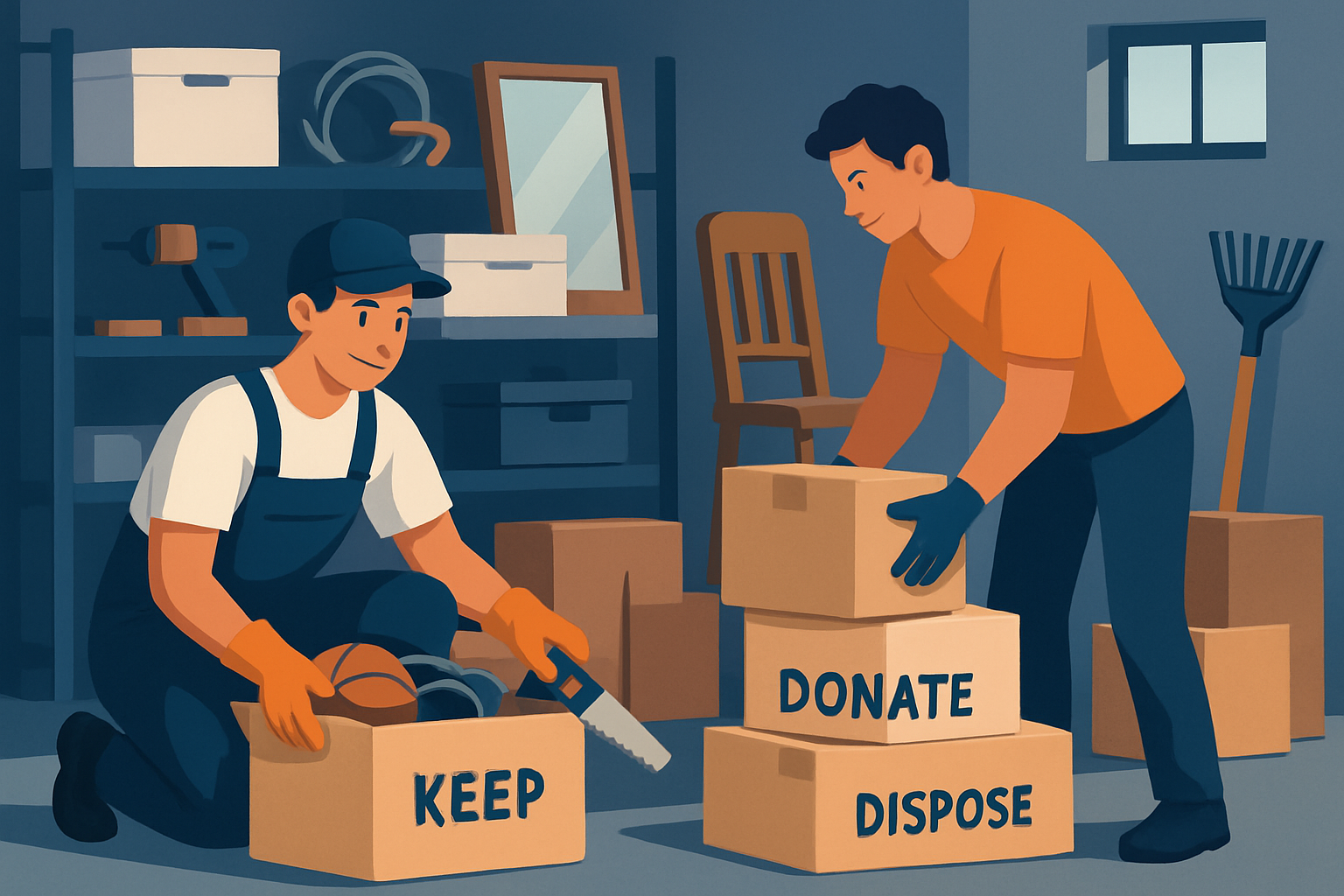
Gig work for decluttering garages, cellars and storage rooms solves a very real problem: the space is full, the job is too physical to postpone again, and a full-service company may feel excessive. For contractors, it is a local side job with a clear result; for clients, it is a way to reclaim usable space in a few focused hours.
The work looks simple until the details appear. Are there stairs? Who decides what gets thrown away? Is transport included? Are there heavy shelves, old paint tins or boxes of family documents? This guide explains how to turn a messy storage space into a well-scoped odd job with realistic pricing, safe expectations and a fair outcome for both sides.
Gig work for decluttering: when it makes sense
A decluttering task sits between cleaning, moving help and basic household support. It usually does not require specialist qualifications, but it does require reliability, care and enough physical ability to lift, carry and sort items without damaging property.
It is a good fit when the client needs help with:
- clearing a garage before selling a car, storing bikes or setting up a workbench,
- sorting boxes after a move,
- preparing a storage room before renovation,
- carrying old furniture or household items to a collection point,
- helping a busy family or older relative handle physical tasks,
- organising seasonal items such as tyres, garden tools, decorations or sports gear.
For a contractor, this kind of side job has a low barrier to entry. Useful basics include work gloves, closed shoes, a torch or headlamp, a few strong bags, and a calm attitude when decisions take longer than expected. If you have a car, a trolley, moving straps or experience with removals, you can offer a broader service and charge accordingly.
For a client, the key is to understand what you are actually buying. A local helper can sort, carry, sweep and reorganise. They may also help load a car. But disposal rules, hazardous materials, building regulations and recycling arrangements remain things you should check through official local sources or your property manager. Do not assume that a helper can legally take every item away just because it fits in a vehicle.
Define the scope before anyone arrives
Most problems in small local jobs come from vague instructions. A message that says help needed in garage gives almost no information. A better post shows photos, describes the access route and separates sorting from carrying and transport.
Before agreeing on the job, cover these points:
- Location and access: garage, cellar, attic, storage room, apartment block, detached house. Are there stairs, a lift, narrow doors, low ceilings or a long walk to the parking area?
- Goal: sort everything, carry selected items, sweep the space, assemble shelves, load a vehicle, or simply create walking space.
- Item categories: keep, donate, sell, dispose of, move elsewhere, decide later.
- Heavy objects: cabinets, appliances, tiles, books, tools, exercise equipment, doors or timber.
- Supplies: who provides bags, boxes, labels, tape, gloves, cleaning products or a vacuum?
- Time limit: must it be done in one visit, or can it be split into stages?
- Waste and transport: is the contractor only carrying items, or also driving them somewhere?
A useful rule is simple: if the owner is unsure, the item goes into a decision pile. Contractors should not make independent decisions about personal papers, photographs, old tools, collections or anything that may have sentimental or resale value. Speed matters, but mistakes in decluttering are hard to undo.
On MiniJob, a client can post this as a short local task and nearby contractors can apply with their availability and proposed price. The best posts include photos and say whether one person is enough, two people are needed, or a vehicle is part of the job.
Pricing: hourly rate or fixed price?
Decluttering prices vary by city, distance, urgency, stairs, weight, dirt, parking and whether transport is included. A tidy two-hour sorting task is not the same as carrying heavy furniture from a basement to a loading area. If the job involves dust, sharp objects, poor lighting or heavy lifting, the price should reflect that.
The ranges below are practical starting points, not legal or official rates. Use them to plan a budget and then adjust for your location and the actual conditions.
| Task type | Typical time | Indicative price range |
|---|---|---|
| Sorting boxes and small household items | 2–4 hours | EUR 12–25 per hour or PLN 35–70 per hour |
| Carrying light bags or boxes to a car or collection area | 2–5 hours | EUR 15–30 per hour or PLN 45–90 per hour |
| Heavy lifting with stairs | 2–4 hours | EUR 20–40 per hour per person |
| Help with a small car or van available | 2–4 hours | EUR 60–180 for a small task |
| Two-person garage clear-out | 3–6 hours | EUR 150–450 for the agreed scope |
For contractors, the biggest pricing mistake is treating all decluttering as light cleaning. Your rate should account for travel time, preparation, physical effort, dirty conditions, parking, fuel and the risk that the job is larger than described. If the photos are unclear, suggest an hourly rate with a minimum call-out amount.
For clients, a fixed price works best only when the scope is clear. If you provide photos, item counts and exact expectations, contractors can quote with confidence. If the space is packed wall to wall and decisions will be made during the job, an hourly arrangement is usually fairer.
How to write a task post that gets useful replies
A strong listing helps good contractors decide quickly. It also discourages replies from people who have not read the details. You do not need a long essay, but you do need facts.
Use this structure:
- Title: Help clear a garage, Saturday morning, near the city centre.
- Scope: sort boxes, carry around 20 bags, move two shelves, sweep the floor.
- Access: ground-floor garage, parking outside, good light, no stairs.
- Heavy items: one old desk and several boxes of books.
- Supplies: bags, labels and gloves provided by client.
- Timing: about 3 hours, ideally 9:00 to 12:00.
- Budget: fixed budget or hourly range, transport not included unless agreed.
Add exclusions as well. For example: no hazardous waste, no dismantling built-in furniture, no disposal fees included, no work after 18:00. Clear limits make the job easier to price and reduce awkward discussions on site.
If you are applying as a contractor, reply with specifics. Say when you can arrive, whether you come alone, whether you have a trolley or car, what your rate includes and what it excludes. A message such as I can come on Saturday at 10:00, I have gloves and moving experience, my rate is EUR 22 per hour with a 3-hour minimum, no hazardous disposal included is much more convincing than simply asking is this still available?
Safety, trust and comfort on the day
Storage spaces can be dusty, dark, cold and crowded. The safest jobs start with a quick walk-through before any lifting begins. Both sides should agree on the route, the decision piles and the stopping point.
Use this checklist:
- check lighting, low ceilings and uneven floors,
- keep stairs and exits clear,
- wear closed shoes and work gloves,
- do not open unlabelled chemical containers,
- separate documents, photographs and personal items,
- lift heavy objects with two people where needed,
- protect walls and doorframes when carrying furniture,
- agree where bags or boxes will be placed outside,
- keep neighbours, shared corridors and emergency exits in mind,
- pause if the job reveals mould, pests, broken glass or unsafe materials.
Trust also matters because this work often happens in or near someone’s home. Keep communication in the agreed channel, confirm the price before starting, and do not expand the scope without discussing it. If the client suddenly adds transport, dismantling shelves or extra rooms, that is a new agreement, not a favour automatically included in the original price.
MiniJob supports this kind of local arrangement because clients can compare applicants, chat before accepting a proposal and rate each other after the task. Contractors can build a profile with reviews and a portfolio, which is especially useful for home-based odd jobs where reliability is just as important as strength.
Turning one decluttering task into repeat side jobs
For contractors, garage and storage-room work can lead to other local jobs: moving furniture, assembling shelves, garden clean-ups, small repairs or helping prepare a home for rental. The result is visible, so a satisfied client often remembers the helper when another task appears.
After the job, a contractor should:
- ask politely for a review,
- request permission before using before-and-after photos,
- update the profile with specific services,
- mention limits such as no hazardous waste or no large van,
- respond quickly to similar nearby tasks.
Specific profile wording beats vague claims. Instead of available for anything, write something like: garage and storage-room decluttering, carrying boxes, light moving help, shelf assembly, small household tasks. Clients search for a solution to a concrete problem. Make it easy for them to recognise that you can solve it.
Clients benefit from keeping their own notes too. If the first three hours only covered sorting, schedule a second visit for carrying and sweeping. Breaking a large job into stages often produces a better result than trying to make every decision in one exhausting afternoon.
FAQ
Do I need one helper or two for a garage clear-out?
One helper is often enough for sorting, labelling, sweeping and carrying light boxes. Two people are safer for heavy furniture, appliances, stairs, long carrying distances or any task that must be completed quickly.
Should I pay hourly or agree a fixed price?
Use an hourly rate when the contents are unknown or decisions will be made during the work. A fixed price works better when you provide photos, an item list and a clear end result. In both cases, confirm what is included before the job starts.
Who handles disposal and recycling?
Agree this in advance. Many local helpers can carry items to a car, a shared collection area or a designated point, but disposal fees, recycling rules and hazardous materials should be checked through local official sources. Transport is usually a separate part of the price.
What should a contractor bring?
At minimum, bring closed shoes, gloves, water and a phone with enough battery. Depending on the task, a trolley, straps, dust mask, headlamp and spare bags may help. Do not assume the client has everything ready unless the listing says so.
Reclaim the space or find a practical local task
Decluttering a garage, cellar or storage room is one of the clearest forms of local gig work: a visible problem, a few hours of focused effort and a result the client can feel immediately. The difference between a smooth task and a stressful one is almost always the same: photos, scope, access, price and safety agreed before lifting begins.
Post a local task or browse nearby side jobs on MiniJob. To manage offers from your phone, get the app on Google Play and keep small local jobs within easy reach.