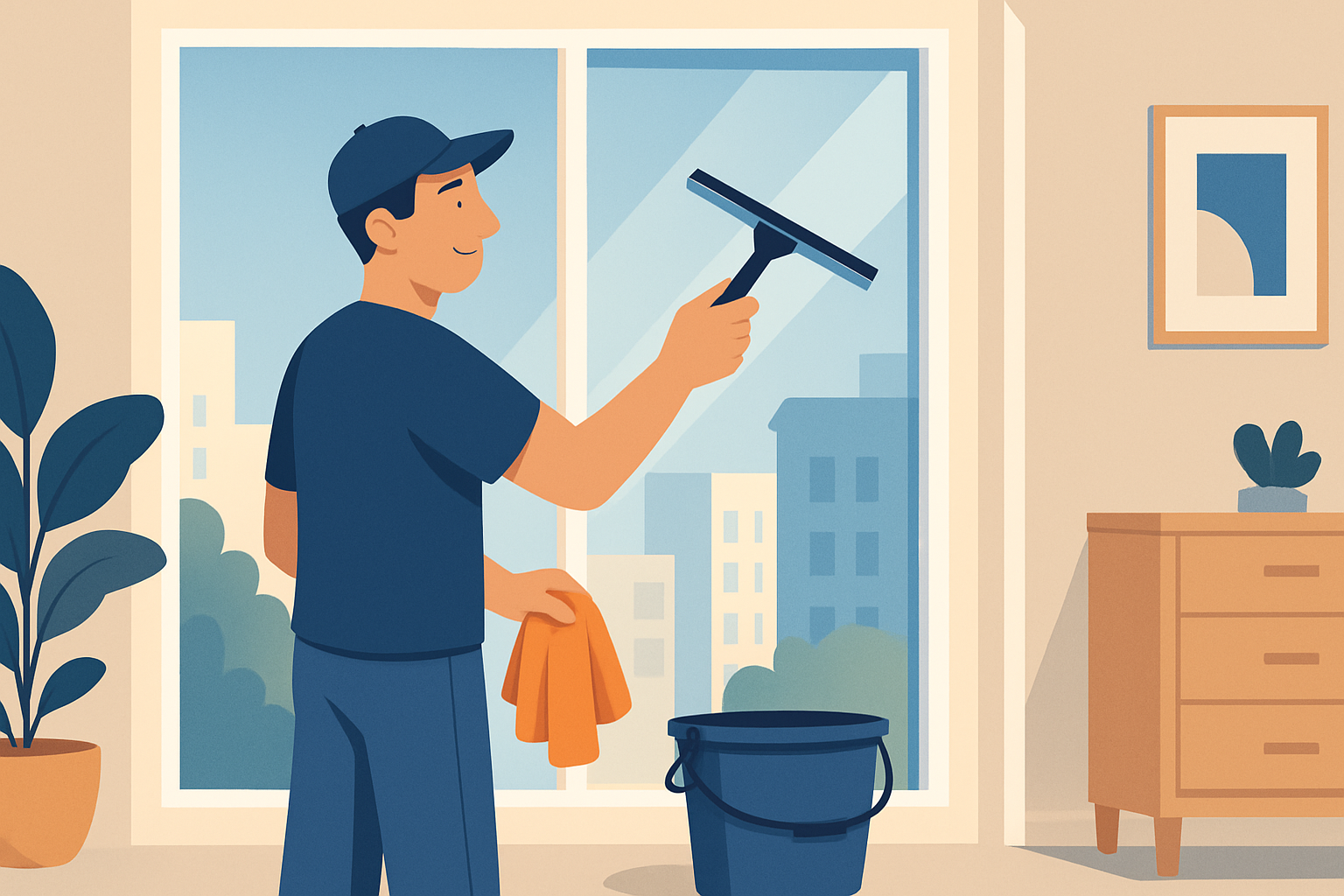
Gig work in window cleaning looks simple until the client expects frames, tracks, balcony glass and hard-water marks included in the same price. For clients, the challenge is finding reliable local help for a specific day; for workers, it is pricing the job without accidentally adding unpaid extras.
As a small local task, window cleaning is practical because it can often be completed in two to five hours, needs modest equipment and produces a visible result. This guide covers realistic price ranges, what to include in a task post, how to stay safe and how to avoid the awkward scope creep that turns a neat side job into a frustrating afternoon.
Gig work window cleaning: when it is the right fit
Window cleaning works best as gig work when the job is clear, local and limited in risk. Typical examples include a small apartment before guests arrive, a rental handover, a shopfront that needs a quick refresh, or a post-winter clean when dust and rain marks have built up. For a contractor, it can be a good first side job because the result is easy to show and the entry cost is lower than for repairs or moving jobs.
Good small-job scenarios include:
- an apartment with three to six accessible windows,
- balcony doors or patio glass that need a regular clean,
- an office or small studio with inside-facing glass,
- a rental property before photos or viewings,
- light post-renovation dust, not heavy construction residue.
Not every window job belongs in a task marketplace. High exterior windows, roof windows, commercial facades, rope access work or jobs requiring ladders on uneven ground should usually be handled by properly equipped professionals. If access is risky, say so before anyone travels. A local helper should not have to discover on arrival that the task involves leaning out of a fourth-floor window.
On MiniJob, a client can post a short local task with photos, the number of windows, the preferred time and a suggested budget. Nearby contractors can apply, then both sides can compare profiles, chat, agree on the price and leave a review after the job.
What window cleaning usually costs
Rates vary by city, travel time, access, dirt level and whether the helper brings supplies. A simple refresh is very different from cleaning paint splashes, adhesive or renovation dust. The ranges below are starting points for discussion, shown in EUR and PLN so readers in different markets can sense the scale.
| Job type | Typical time | Indicative price |
|---|---|---|
| 3–4 standard apartment windows | 2–3 hours | EUR 35–70 or PLN 120–220 |
| 5–7 windows with frames and sills | 3–5 hours | EUR 60–120 or PLN 220–400 |
| Large balcony or patio glass | +30–90 min | +EUR 15–40 or +PLN 50–150 |
| Small shopfront, inside and outside | 1–2 hours | EUR 25–60 or PLN 80–180 |
| Light post-renovation window clean | 4–6 hours | EUR 90–180 or PLN 350–650 |
For clients, the cheapest offer is not automatically the best. If the worker needs to travel across town, bring equipment, work on a weekend and clean frames as well as glass, an unrealistically low price may lead to rushed work or a last-minute cancellation. For contractors, underpricing feels tempting at the beginning, but it can leave almost no profit after travel, supplies and the extra time needed to do the job properly.
A fair estimate starts with five questions:
- How many panes or window sections are there, not just how many rooms?
- Are both sides accessible and safe to reach?
- Are frames, handles, tracks, sills, blinds or screens included?
- Who provides cleaning products, cloths, a bucket and a step stool?
- Is the dirt normal dust and rain, or paint, plaster, stickers and glue?
For straightforward jobs, a fixed price is often clearer than an hourly rate. If the condition is uncertain, agree on a base price from photos and a possible adjustment for heavy residue or extra windows. That keeps the conversation transparent before the first cloth gets wet.
How to write a task post that gets useful replies
A good window cleaning post does not need to be long, but it does need the details that affect time and safety. Workers want to know what to bring, how long to block in their calendar and whether the job can be done without taking unnecessary risks. Vague posts attract vague quotes.
Include the following:
- neighbourhood or approximate location,
- floor level and whether there is a lift if access matters,
- number of windows, doors and large glass panels,
- photos of the biggest or dirtiest windows,
- exact scope: glass only, or frames, tracks and sills too,
- preferred date and time window,
- whether supplies are available on site,
- any pets, parking restrictions or access instructions,
- your budget or a request for a quote after photos.
A strong post might read like this: Need help cleaning 5 windows in a two-bedroom apartment. Scope includes inside and outside glass where safely reachable, frames and inside sills. One large balcony door, photos attached. Flexible Thursday evening or Saturday morning. Basic supplies available, but happy if you bring your own. Please quote for the full job.
Avoid posts that only say window cleaning needed today, send price. Without photos, number of windows or access details, good contractors cannot estimate properly. On MiniJob, the chat is useful for confirming details before the work starts, especially if the client adds photos and replies quickly to practical questions.
Checklist for contractors: equipment, safety and scope
Beginners do not need a van full of tools. For most simple flats, a squeegee, microfiber cloths, a sponge or washer, mild detergent, gloves, a small scraper used carefully, rubbish bags and something to protect floors will cover the basics. What matters more is discipline: do not damage surfaces, do not overpromise and do not work in unsafe positions.
Before accepting, ask:
- can every window be reached safely from inside or from stable ground?
- are there delicate wooden frames, old seals or coated glass?
- are blinds, curtains, fly screens or plants in the way?
- is the dirt ordinary dust, greasy kitchen film or renovation debris?
- where can you refill and empty water?
- are there building rules about working times or access?
If you are not trained for height work, say no to height work. A small side job is not worth injury, broken glass or a dispute. For roof windows, exterior upper-floor glass, unstable ladders or commercial facades, the responsible answer is to recommend specialist help.
After the work, walk through the result with the client. If daylight makes streaks visible, fix reasonable misses within the agreed scope. If the client asks for extra tasks such as cleaning blinds, scraping paint from tiles or washing balcony floors, quote the extra work separately before continuing.
A portfolio helps you win future side jobs. Take before-and-after photos only with permission, avoid showing personal documents or private interiors, and keep the focus on the glass. Reviews also matter: arrive when agreed, communicate delays early and leave the space tidy.
Mistakes that cause disputes
Most disagreements happen before cleaning begins. The client thinks all frames, tracks, blinds and balcony glass are included. The contractor thinks the quote was for glass only. Both assumptions may be reasonable, but unspoken assumptions do not make good agreements.
Common mistakes include:
- counting windows without counting panes or large glass doors,
- giving a fixed price with no photos and no access details,
- agreeing an hourly rate with no time limit,
- using a chair or loose furniture instead of stable access,
- scraping glass aggressively without knowing the surface,
- forgetting to discuss who brings supplies,
- starting work before confirming the final price.
The simplest habit is to repeat the scope before starting. For example: We agree EUR 85 for six windows, inside and outside where safely reachable, including frames and inside sills, excluding blinds and balcony floor. That sentence takes less than a minute and can prevent an uncomfortable conversation later.
Clients can help by preparing the space. Move plants, remove fragile decorations, clear papers from sills, secure pets in another room and make water available. A prepared room lets the helper spend time cleaning rather than negotiating around obstacles.
FAQ
Is window cleaning good gig work for a beginner?
Yes, if you start with simple, safely accessible apartments and price honestly. It teaches client communication, time estimation and attention to detail. Avoid high windows, heavy renovation residue and jobs that require equipment you do not have.
Should I pay or charge by the hour or by the job?
For clients, a fixed job price is usually easier because the budget is clear. For contractors, a fixed price works when the scope is well described. If the job is uncertain, combine a base price with an agreed extra charge for additional panes or difficult dirt.
What if the job is bigger than the post said?
Pause before starting. Point out the difference calmly and offer either a revised price or a smaller scope that fits the original budget. Do not silently do extra work and expect a higher payment afterwards.
Does the client need to provide cleaning supplies?
No, but it must be agreed. Some helpers prefer to bring their own products and include that in the price. For delicate frames, coated glass or unusual surfaces, the client should mention any product restrictions before the visit.
Turn a simple clean into a well-run local job
Window cleaning is one of the clearest odd jobs when both sides define the scope: how many windows, what surfaces, which supplies, what time and what price. The client gets a brighter home without giving up a whole afternoon, while the contractor can build reviews and a small portfolio with low start-up costs.
If you need local help or want to earn extra money with practical side jobs, post or browse tasks on MiniJob. To manage nearby opportunities from your phone, download the MiniJob app on Google Play and start with clear, manageable jobs close to home.