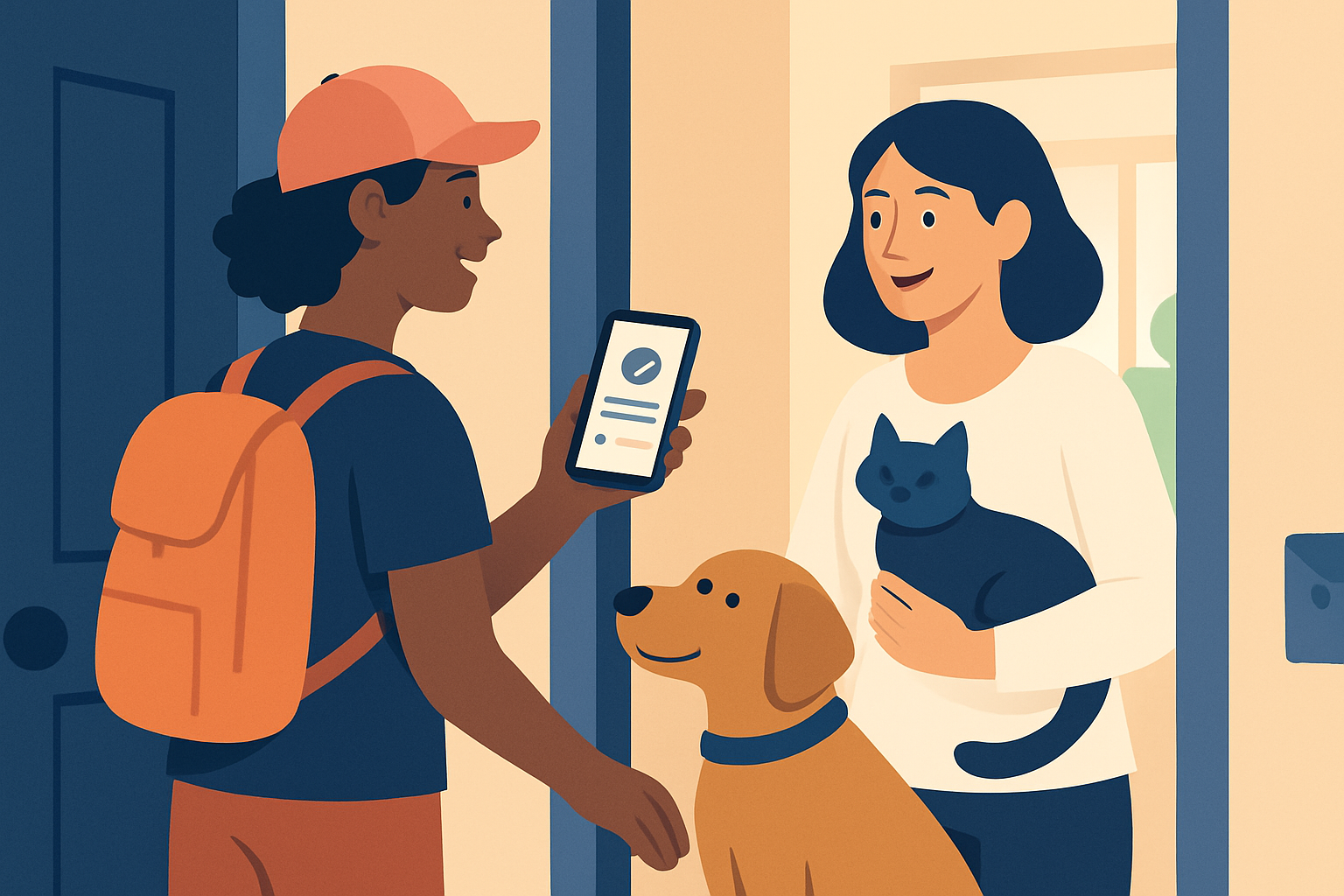
Pet sitting gig work looks easy until keys, feeding notes, medication and a nervous dog are all involved. Clients want peace of mind, while contractors need a clear task that can be done responsibly, on time and at a fair price.
The best pet care side jobs are small but specific: one cat visit a day, a lunchtime dog walk, feeding rabbits, changing water or staying for an evening while the owner is away. This guide gives practical price ranges, checklists and trust rules for both sides.
Pet sitting gig work: who it suits and when it works
Pet sitting is a good fit for people who want local side jobs with flexible hours, but it is not a casual favour if money and someone’s home are involved. A simple visit can include entering an apartment, checking food and water, cleaning a litter tray, locking doors, sending a short update and noticing if the animal behaves strangely.
It works best when the contractor lives nearby. If a 30-minute cat visit requires a long trip across town, the job becomes expensive for the client and inefficient for the sitter. For contractors, a tight local area is often smarter than chasing every task. For clients, choosing someone close can make last-minute changes easier.
Typical pet sitting tasks include:
- dog walks before work, after school or in the evening;
- cat visits during a weekend or holiday;
- feeding small pets such as rabbits, guinea pigs or fish;
- staying with a pet for a few hours while the owner attends an event;
- basic care for an older animal, if the instructions are clear.
On a task marketplace such as MiniJob, clients can post a local task, compare applicants and use the chat to agree the details before sharing sensitive information such as the full address or key arrangements.
What to charge for pet sitting: realistic ranges
Rates vary by country, city, distance, time of day and level of responsibility. The figures below are practical examples in EUR and PLN, not fixed market rules. A short dog walk near the sitter’s home is very different from overnight care for an elderly pet that needs medication.
| Task type | Typical time | Example price range |
|---|---|---|
| Local dog walk | 30–45 min | EUR 8–18 / PLN 25–50 |
| Longer dog walk or park visit | 60–90 min | EUR 15–35 / PLN 45–90 |
| Cat visit with food, water and litter | 20–40 min | EUR 10–25 / PLN 35–70 |
| Two visits in one day | 40–80 min total | EUR 20–50 / PLN 70–140 |
| Evening care in the client’s home | 2–4 hours | EUR 25–70 / PLN 80–180 |
| Overnight pet sitting | per night | EUR 40–120 / PLN 120–250 |
| Medication according to written notes | add-on | EUR 3–10 / PLN 10–30 |
When setting a price, include the time that is easy to forget: travel, messages, picking up keys, returning keys and sending updates. If the pet is anxious, strong, reactive or medically fragile, the task carries more responsibility and should not be priced like a quick errand.
Clients sometimes ask for a package price for several days. That can work well, but it should still reflect the number of visits and journeys. Two visits per day for five days means ten separate arrivals, ten checks and ten moments of responsibility for the home.
Contractors who use pet care to earn extra money should also think about costs: transport, waste bags, gloves, treats if agreed, phone data and the unpaid time spent answering messages. Formal employment, tax or insurance rules differ by country, so use official sources for your own situation instead of relying on online comments.
How clients should write a task post that attracts good sitters
A strong task post does not need to be long. It needs to remove guesswork. Good sitters are more likely to apply when they can see the animal, dates, duties and price clearly.
Include these details:
- Animal and temperament: species, age, size, energy level, fears and behaviour around people or other animals.
- Exact duties: walk, feeding, fresh water, litter tray, medication, playtime, brushing or a short home check.
- Dates and time windows: for example, between 18:00 and 20:00, not just evening.
- Approximate location: neighbourhood or district first, not the full address in a public post.
- Budget: price per visit, walk, hour or night.
- Special requirements: experience with large dogs, comfort with injections only if relevant, no perfume because of allergies, or ability to climb stairs.
A useful post might read: Cat sitting needed from Friday to Sunday in the city centre. One 30-minute visit per day: wet food, fresh water, litter tray and a photo update. The cat is shy and should not go onto the balcony. Budget: EUR 18 per visit. Key handover on Thursday evening.
A weak post says: Need someone for my dog this weekend, details later. Responsible applicants often avoid vague posts because they cannot judge time, risk or fair pay.
How contractors can apply and prepare for the first visit
Your application should answer the client’s practical worries. Instead of writing only interested, say when you are available, how close you are, what experience you have and which details you would like to confirm. If you are new, be honest and start with simple tasks. Clients may prefer a careful beginner for a clear cat visit over someone who overpromises.
Before accepting, ask about:
- food amounts, feeding times and where supplies are stored;
- water bowls, fountains and cleaning routine;
- leash, harness, walking route and off-limit areas;
- behaviour around bikes, children, other dogs or loud streets;
- medication, written instructions and what to do if the pet refuses it;
- emergency contact and preferred vet;
- doors, alarms, intercoms, windows and rooms that should stay closed;
- what kind of update the client expects after each visit.
Keep a repeatable checklist on your phone. After every visit, confirm: animal seen, food given, water refreshed, litter or waste handled, medication done if agreed, doors locked, keys stored safely, photo or message sent. It may feel basic, but a checklist prevents mistakes when you have several small jobs in the same week.
Your profile also matters. A clear photo, a short description of your experience, availability, languages spoken and previous reviews help clients decide. On MiniJob, contractors can build a profile with reviews and a portfolio, which makes future side jobs easier to win than starting from zero every time.
Trust and safety: keys, homes and red flags
Pet sitting often involves access to a private home. Treat that seriously. Full addresses, entry codes and key details should be shared only with the chosen person, not in public comments. Key handover should be confirmed clearly: who gives the key, when it is returned and what happens if plans change.
For dogs, a short meet-and-greet is especially useful. Ten to fifteen minutes can be enough to see how the dog reacts, where the leash is, which exit to use and whether the first walk should be done with the owner present. Strong or reactive dogs are not ideal for a first-time sitter without support.
Red flags from a client include:
- pressure to accept immediately without enough information;
- surprise duties such as cleaning the whole apartment;
- unclear payment terms;
- hiding aggression, illness or escape risk until the last moment.
Red flags from a contractor include:
- no questions about food, keys or the pet’s health;
- wanting to take the animal elsewhere without agreement;
- ignoring time windows;
- refusing to discuss price and scope before the task.
A simple rule helps: anything that affects safety, time or price must be agreed before the task starts.
FAQ
Is pet sitting a good side job for beginners?
Yes, if you start with low-risk tasks and describe your experience honestly. A short cat visit, feeding small pets or walking a calm dog nearby can be a good start. Medication, overnight stays and reactive dogs require more confidence and clearer instructions.
How early should I book a pet sitter?
For an ordinary weekend, a few days may be enough. Before holidays or long weekends, start earlier so you can compare applicants, arrange a meet-and-greet and hand over keys without rushing.
Should sitters send photos after every visit?
Usually yes, if the client wants it. A short photo plus a message saying the pet ate, water was changed, litter was cleaned and the door is locked builds trust. Do not post photos of someone else’s home or pet publicly without permission.
What if the pet behaves differently from the description?
Stop and contact the owner. Describe the behaviour and ask for instructions. If there is a risk of biting, escape or illness, safety comes before completing the original plan at any cost.
Start small, agree everything, build trust
Pet sitting can be a practical way to earn extra money and a real relief for owners who need reliable local help. The key is not a perfect speech in your profile; it is a clear scope, fair price, good questions and consistent updates.
If you need a sitter for a cat visit, dog walk or short home check, post the task on MiniJob and compare local applicants. If you want to find pet sitting gig work from your phone, install the app from Google Play and agree the first visit in chat before the keys change hands.